
Transport
TrafficSimulation
30 January 2026
Using traffic simulation models to teach people about better driving
.gif)
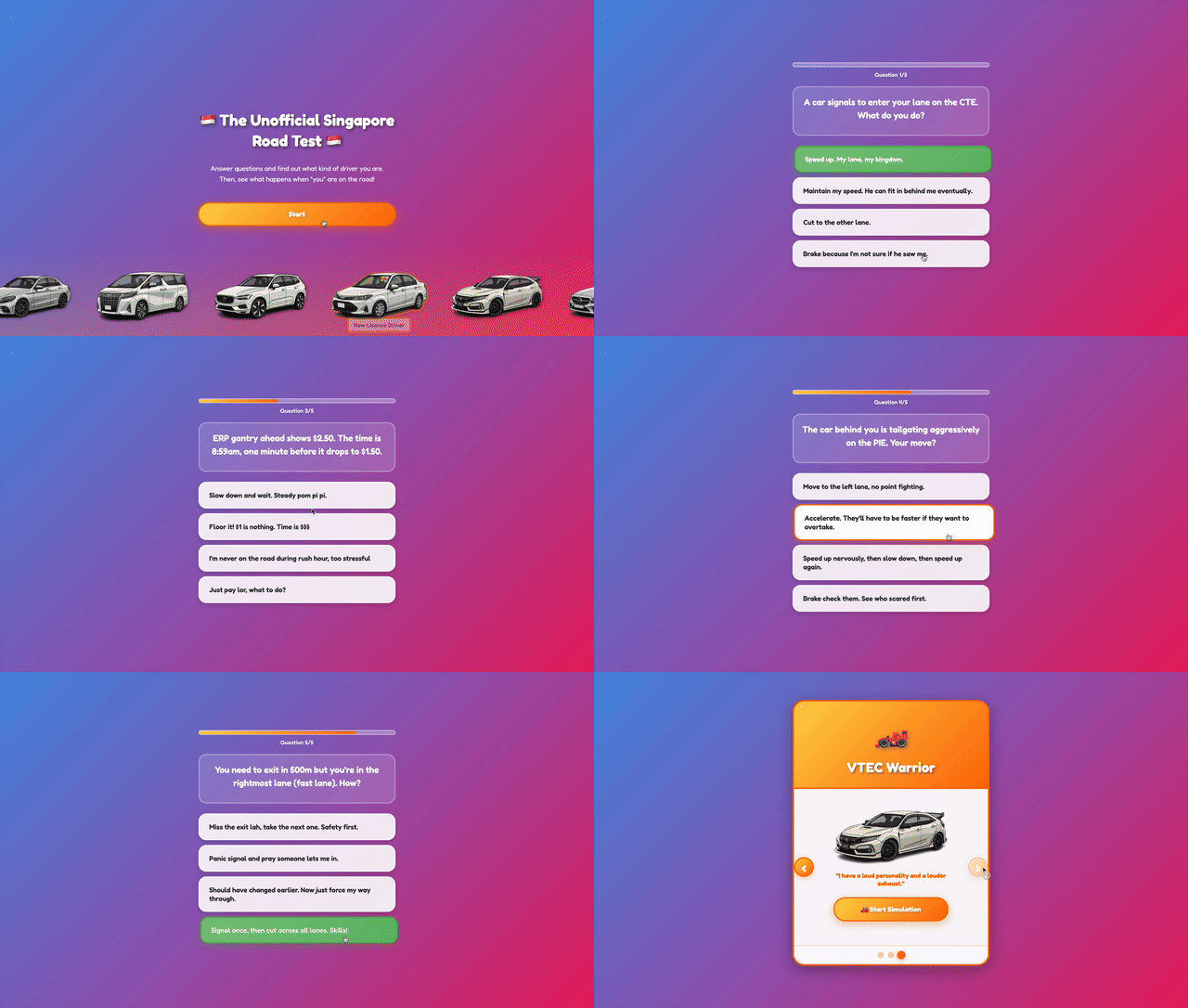

Opportunity
Ever wonder why the PIE crawls even when there’s no accident? We usually blame "phantom jams", but the truth is, the phantom is often us. Between the right-lane hoggers and the kan-cheong weavers, our tiny individual habits create massive ripples for everyone. By making the connection between personal behavior and collective outcomes more visible to road users, TrafficSimulator hopes to highlight how changing driver behavior could reduce congestion without expensive infrastructure changes.
Velocity
I built an interactive web simulation that identifies your driving profile through a 5-question quiz, then visualizes how your habits affect real traffic flow. Users can adjust the percentage of drivers like them on a simulated road and watch congestion patterns emerge in real-time. The tool features profile-specific car animations, an educational tutorial system, and dynamic traffic modeling that shows cause-and-effect immediately. Key limitations: currently demonstrates highway scenarios only; city intersections and mixed traffic not yet modeled.
I used the traffic-simulation-de JavaScript traffic simulation model (open-source code) from movsim/traffic-simulation-de on GitHub to generate and visualize traffic flows in our project. This simulator provides interactive traffic scenario simulations and is available under the GPL-3.0 license.
Learnings from user tests
I tested TrafficSimulator with 25 users in guided, in-person sessions. Most explored around 1-3 driving profiles each.
Two types of users: About half our testers loved just poking around — tweaking the driver mix and watching what happened. The other half kept asking "okay but what should I take away from this?" So while the sandbox experience landed well for some, there's a clear need for stronger, more explicit takeaways for everyone else.
The big "aha": The insight that surprised people most was that traffic actually flows better when everyone drives the same way — not necessarily the "best" way, just consistently. It reframes the problem from "bad drivers cause jams" to "different drivers cause jams", which felt genuinely new to most people.
Make it a game: Users liked the visuals, but a common wish was to play as a driver rather than watch a simulation above. The appetite for a first-person mode suggests people were engaged enough to want more — a good sign for a future gamified version.