
Healthcare
Peek
3 February 2026
Peek makes pharmacy waiting predictable & transparent by showing personalised, live wait times and explaining what's happening behind the counter.
Try it out at: peek.hack2026.gov.sg
Problem Statement
Patients are unhappy about waiting times at pharmacies. Wait times can be up to 1-2 hours, and patients have limited visibility into the state of the queue or their remaining wait time. This creates a frustrating experience where patients can only wait expectantly for their turn, while wondering why the seemingly simple step of collecting medication should take so long.
Opportunity
Unhappiness over long waiting times is a common issue across public healthcare institution (PHI) pharmacies, and is worse in the larger PHIs, which serve higher volumes of patients.
As part of the hackathon, we visited two of the larger PHIs (TTSH and SGH) and observed their workflows and challenges.
A key contributing factor to long wait times is that patients do not arrive at pharmacies consistently over the day. Instead, they typically go to the pharmacy right after their appointments with doctors. As a result, they often arrive at the pharmacy in batches, e.g. after the first morning appointments, after the post-lunch appointments, and at the end of the day as clinics wrap up their final appointments.
Pharmacies have limits on how quickly and how much they can scale their operations to handle this increased load, resulting in unbounded waiting times.
The other aspect to this problem is patient perception. Many patients see medication collection as a mechanical step after the primary purpose of their visit (aka seeing their doctor).
Once finish seeing doctor, the rest should be fast already— Patient
I did not expect the wait here to be longer than waiting for the doctor. And I waited one hour for him.— Patient
With their prescription in hand, they expect it to be straightforward for pharmacists to simply fill these prescriptions, not realising that pharmacists will go through the following steps to prepare and dispense their medication:
Clinical Review: Check the prescription against the patient's medical history to ensure the medication is suitable.
(Intervention): Clarify & resolve uncertainties with doctors, or retrieve out-of-stock medications from other locations. This may take especially long if doctors have ended their shifts or are in other patient appointments.
Packing and Labelling: Each medicine is counted, packed, and labelled with clear instructions.
Medication Counselling: When dispensing, pharmacists explain how each medicine should be taken, what side effects / precautions to look out for, and address any lingering questions from patients.
These steps are necessary for the safe dispensing of medication, but patients have no visibility into or understanding of this process, resulting in mismatched expectations for their waiting times.
Wait, so after registering, then they start packing my medication? I thought everything is in the system already?— Patient
If you tell me they are spending time checking my prescription, I think I will be more patient.— Patient
This sometimes leads to frustrated patients inquiring at the counter about collection times, which interrupts pharmacists' workflows and further compounds delays.
Solution
While decreasing wait times addresses a core part of the problem, there have been many pharmacy process revamps to tackle this over the years.
With more such efforts upcoming, we focused instead on improving the experience of patients who were waiting to collect their medication.
Peek does this by:
Predicting waiting times based on live queue data using a predictive machine-learning model that is trained on the pharmacy's past queue data
Gently educating patients by showing & explaining the different steps taken by pharmacists to safely prepare the patient's medication
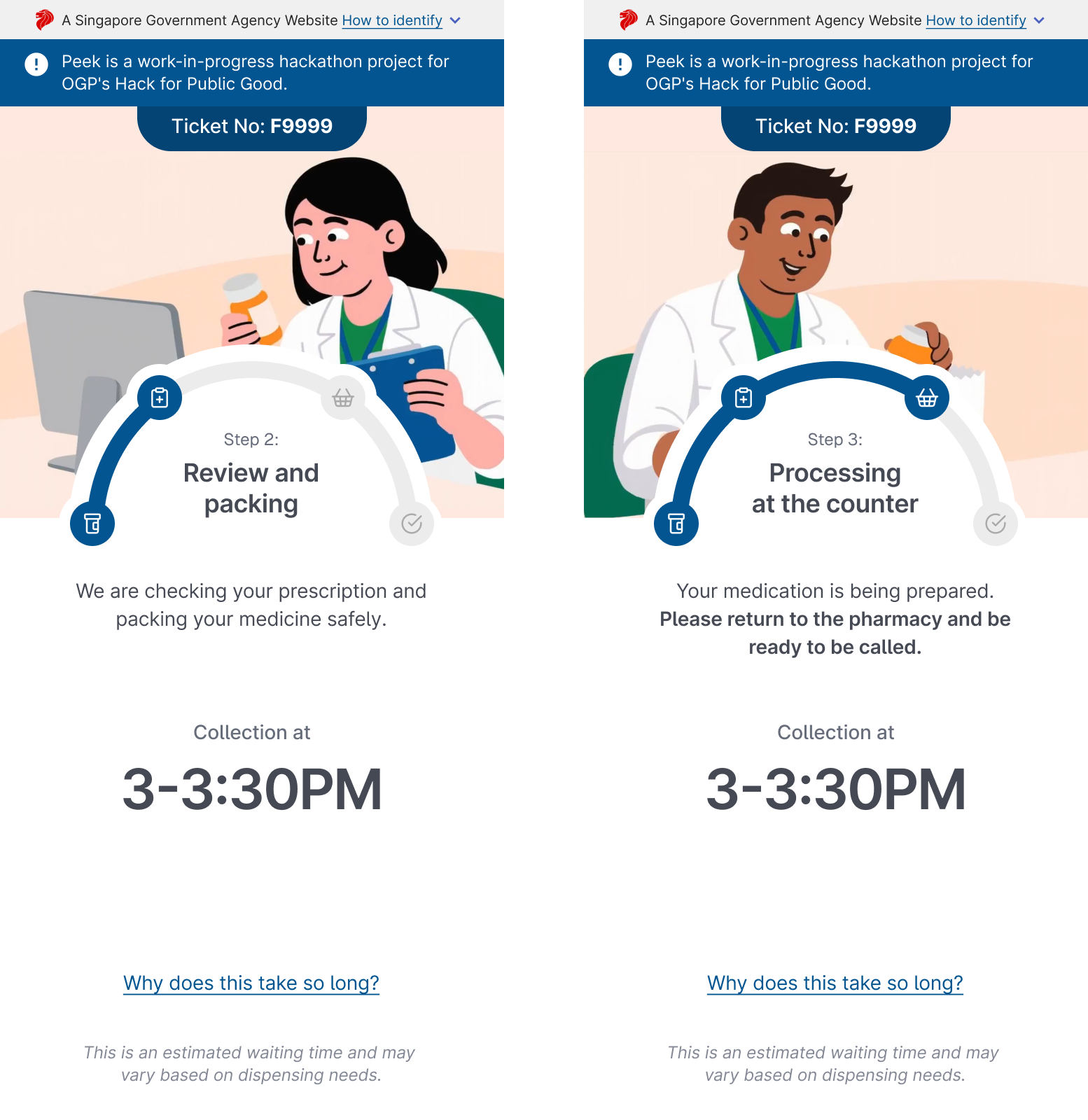
Live waiting time predictions for a queue number
With live, personalised waiting times, patients have more control over their wait and feel assured stepping out to have a meal, run some errands, or even just to make a trip to the toilet!
.png)
An in-app carousel showing the different steps for preparing medication
Every step is accompanied by an explainer that spells out why the step is necessary and how it helps the patient. This context makes the waiting experience more transparent and understandable, reducing patient uncertainty and frustration.
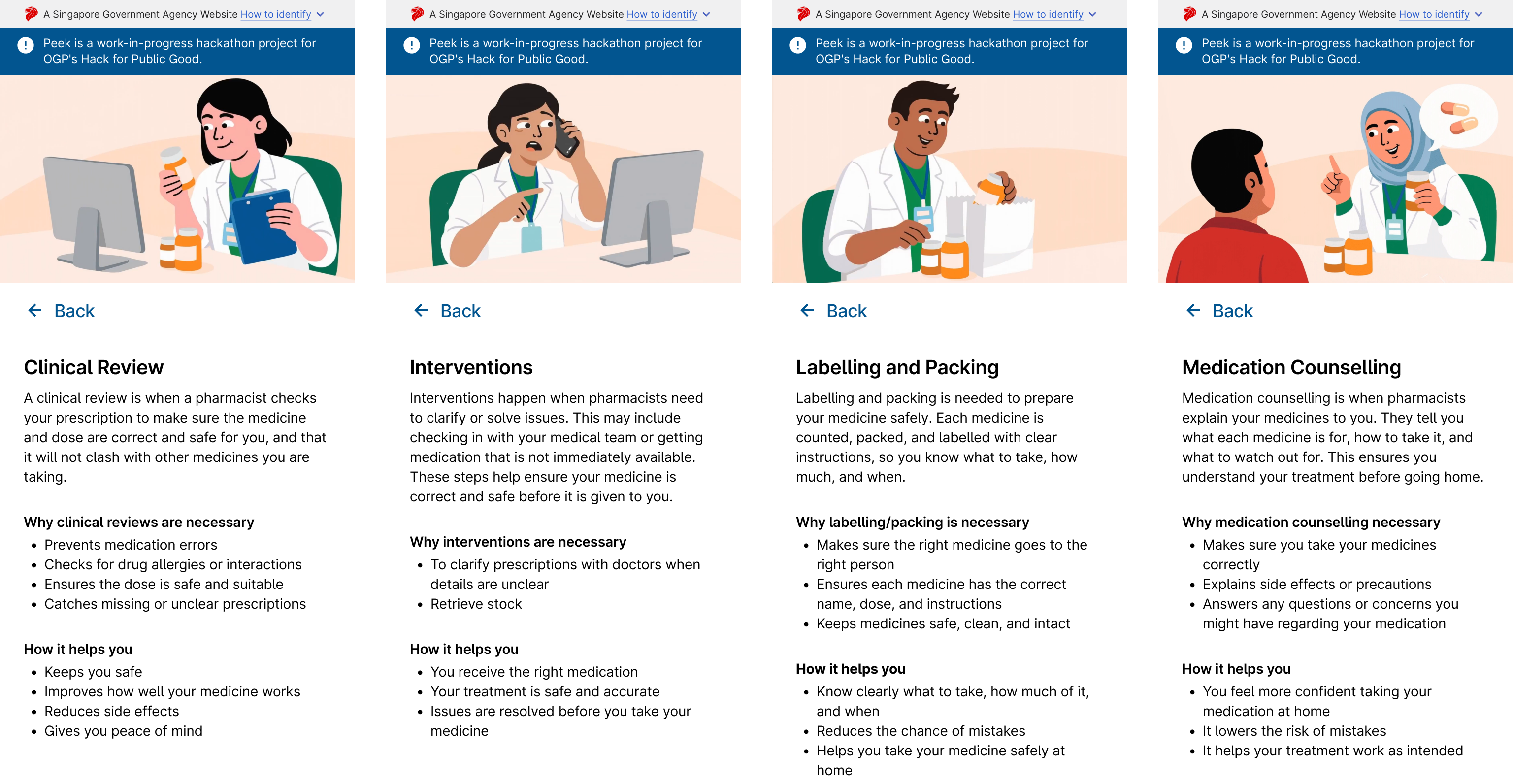
Explainers for the different steps
Traction
In the last week of hackathon, Peek started its pilot at TTSH Pharmacy, with both English & Chinese translations available.
Posters and stands advertising the app were put up, and frontline staff were briefed on how to introduce patients to the tool.
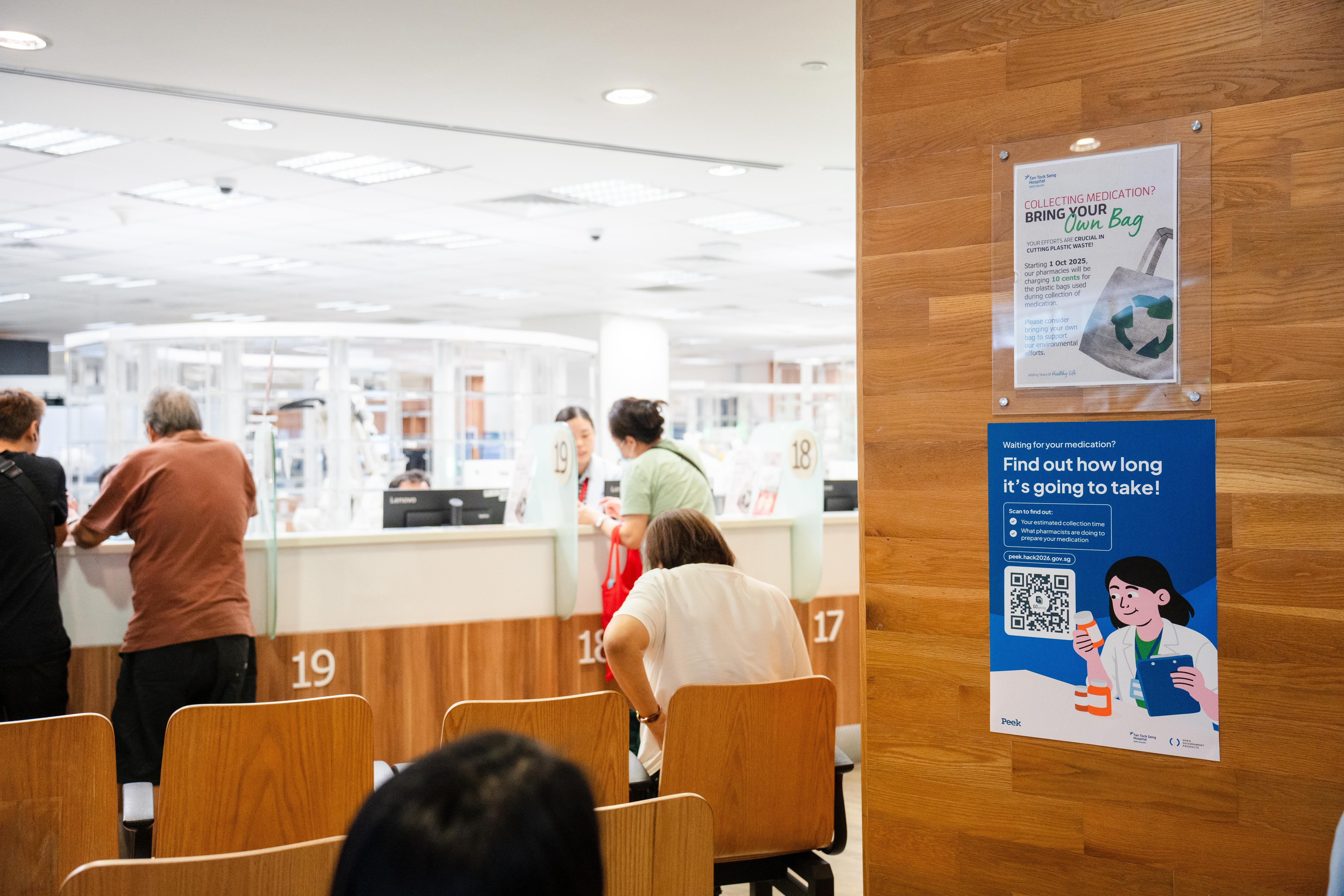
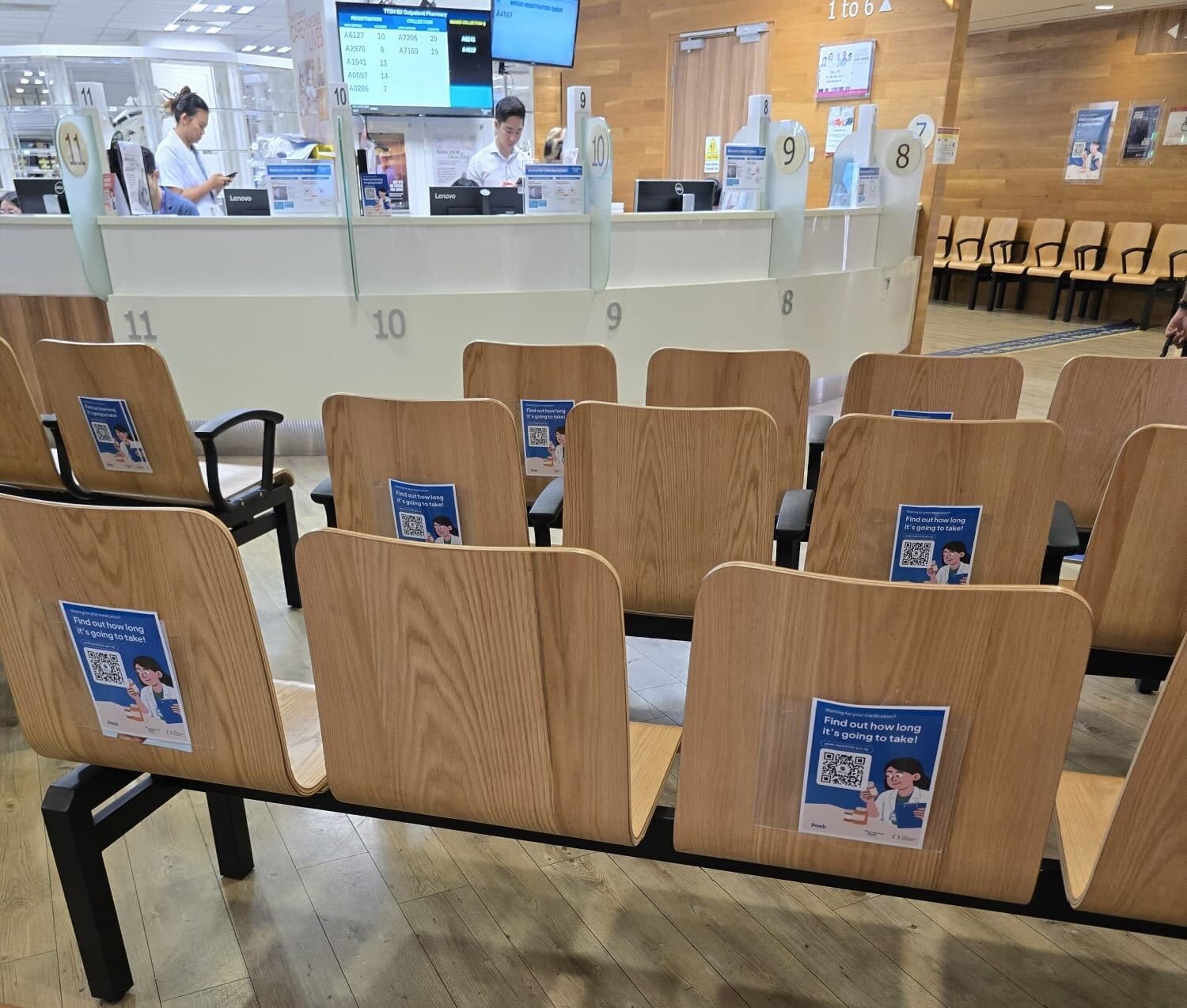
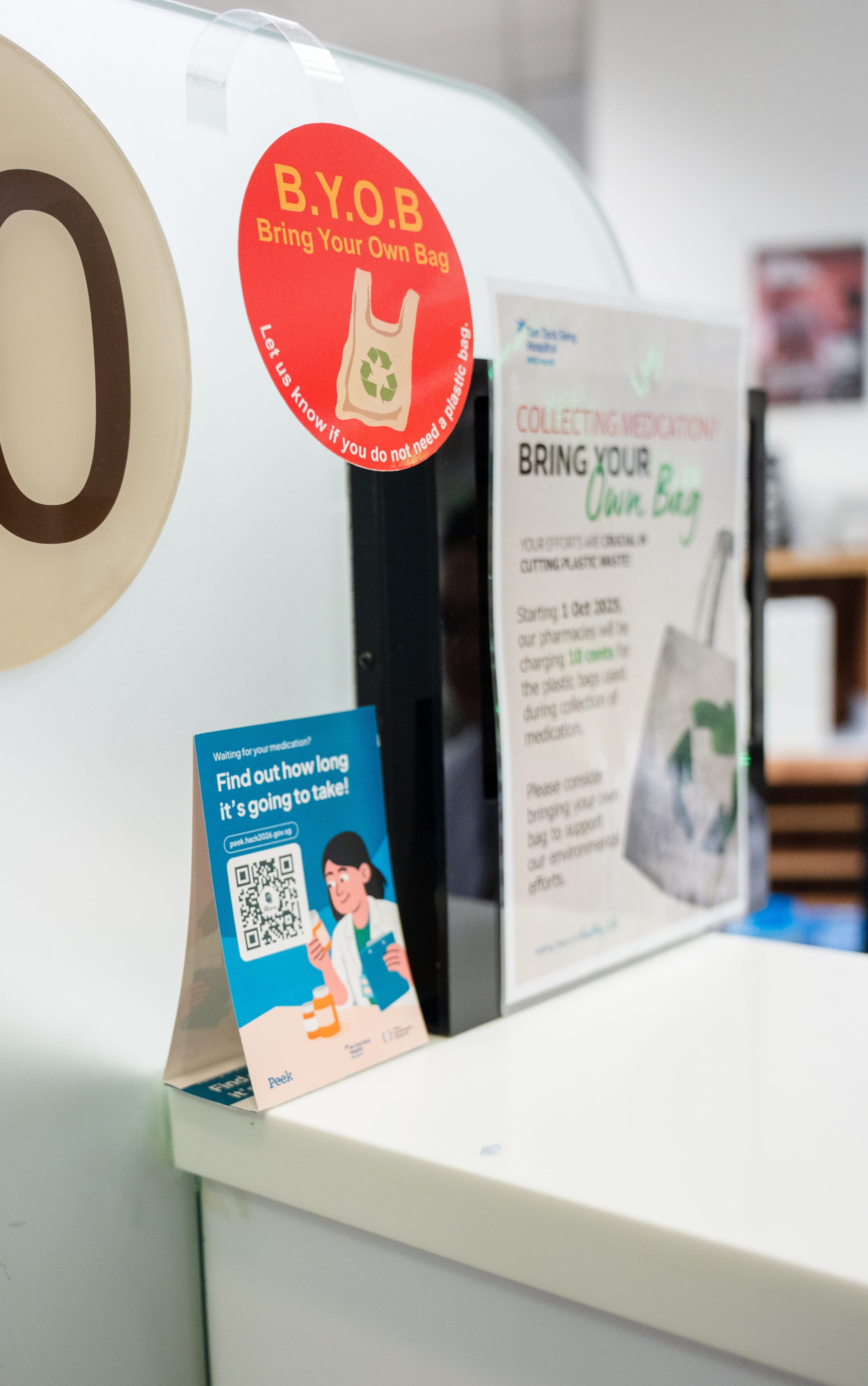
On-the-ground staff shared that the predicted waiting times closely matched the actual dispensing times. In fact, they even used it themselves to help patients check their queue statuses.
Every day, it was used by a third of patients, and 93% of in-app survey respondents (29 out of 31) rated the app as 'Helpful'. One patient included the remarks: 'Yes. I can run errands while waiting.'
The Team
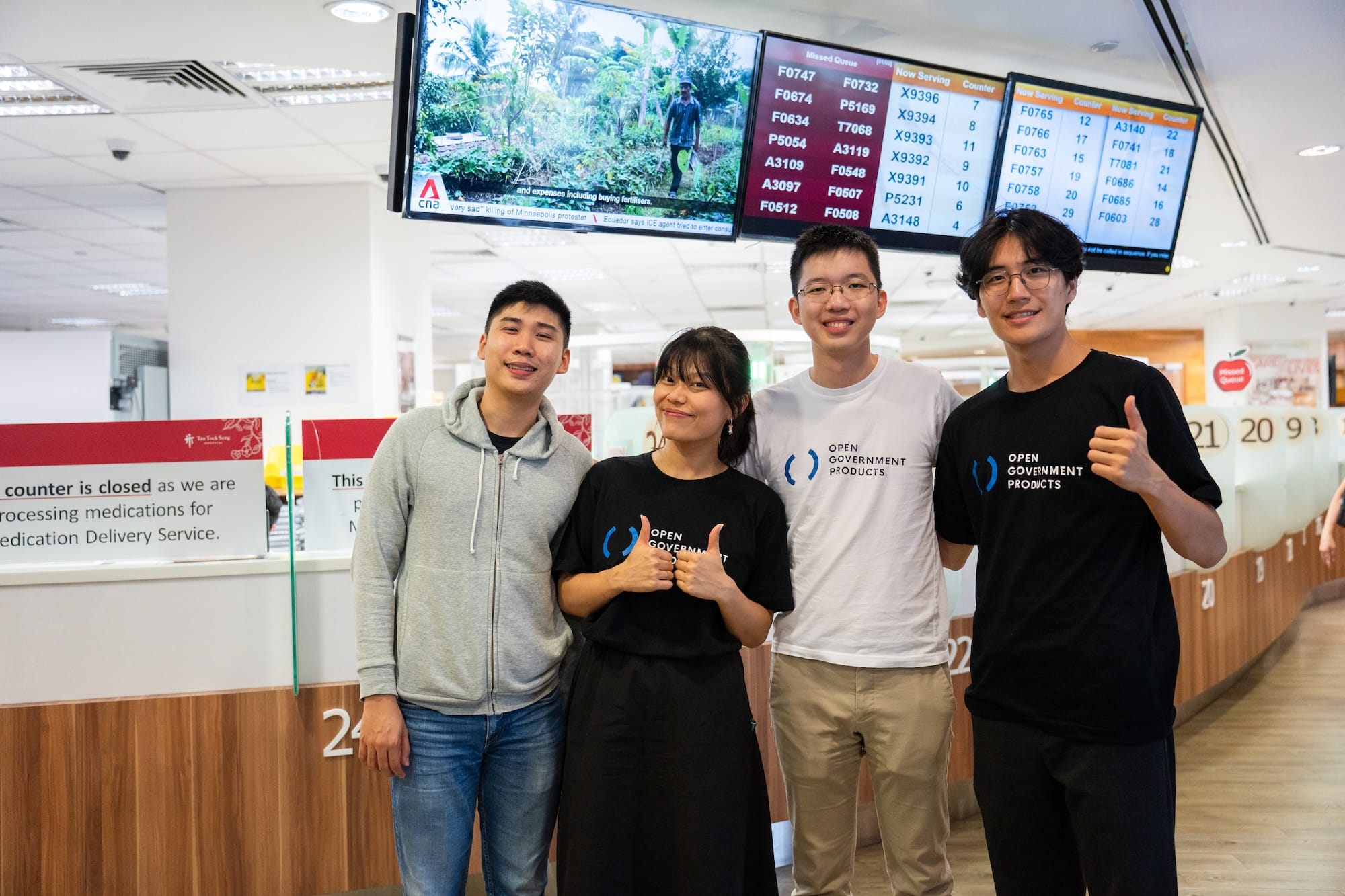
Left to right: Zi Wei (SWE), Qimmy (Design), Caleb (SWE), Bin (SWE)