
Finance
MoneyGoWhere?
30 January 2026
Product Status
Not Active
Assessing funding proposals fast and rigorously
Opportunity - What problem are you working on, and why it matters?
The annual budget of the government of Singapore is routinely more than S$100 billion a year. When that money needs to be spent, public servants evaluate spending proposals, assessing cost-reasonableness, value for money, and whether expenditures serve the public interest.
We spoke to grant assessment officers across different agencies who review hundreds of funding applications ranging from $1 million to $50 million each. These officers do thorough, high-quality assessments, but the complexity of the task means:
Cost benchmarking requires up to 4 weeks of careful research per proposal
Comprehensive review cycles could take up to 6 months to ensure all considerations are addressed
Officers draw on deep individual expertise built over years of experience
Coordination across multiple agencies requires extensive consultation
Specifically for MDDI, seven skilled officers assess high-value technology proposals each year. Their rigorous assessment framework ensures proper due diligence, but benchmarking costs against the full range of historical cases is inherently time-intensive given the volume and complexity of data.
We built MoneyGoWhere? to help these MDDI officers work more efficiently while maintaining their high standards. It supplements their expertise by instantly surfacing relevant historical cost benchmarks and platform options—allowing officers to spend more time on strategic analysis rather than data gathering, leading to quality decisions in less time.
Velocity — What you actually built or changed in the last month
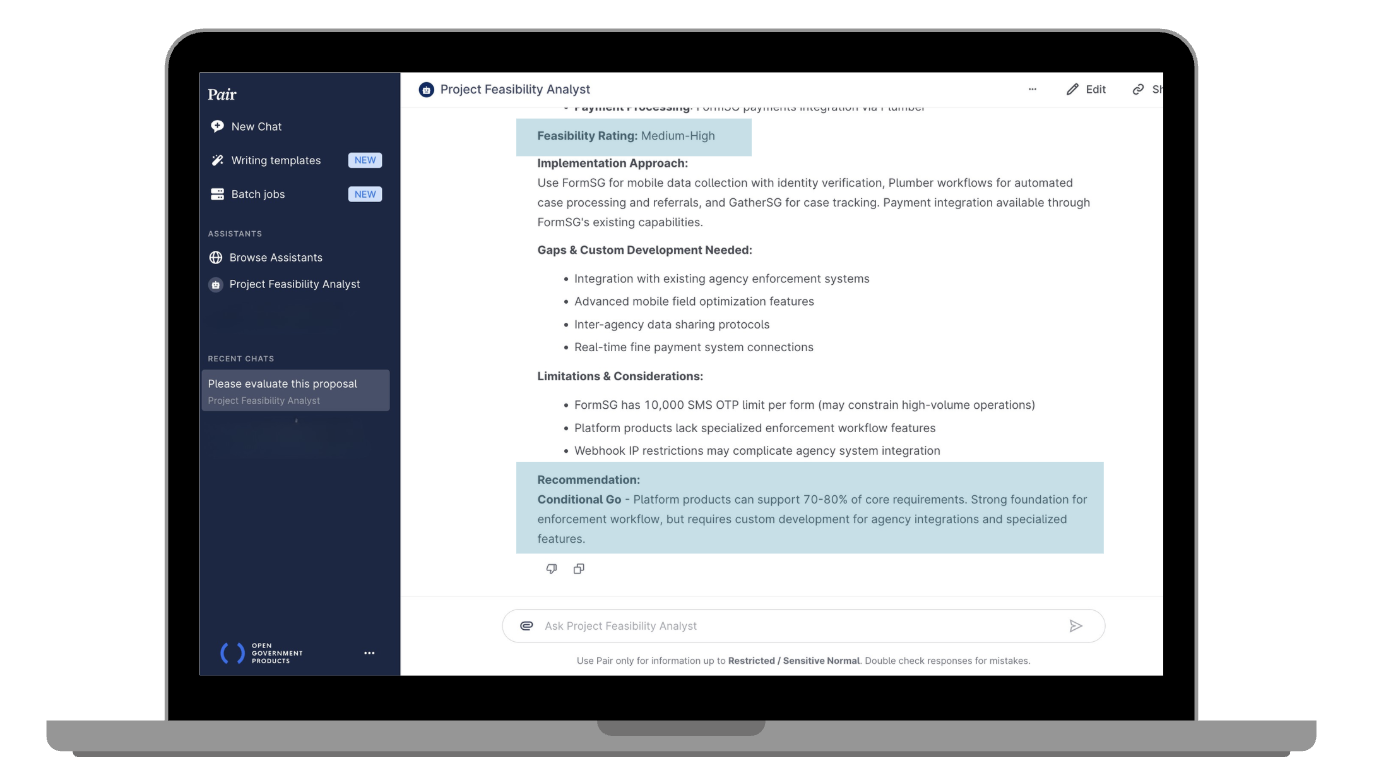
MDDI officers can now access instant support for complex decisions that require extensive research:
1. How much should this product actually cost?
Instead of spending weeks manually researching cost benchmarks across government databases, officers can now get comprehensive assessments based on historical data instantly. Our AI tool surfaces relevant comparable cases, allowing officers to focus their expertise on analysis rather than data gathering.
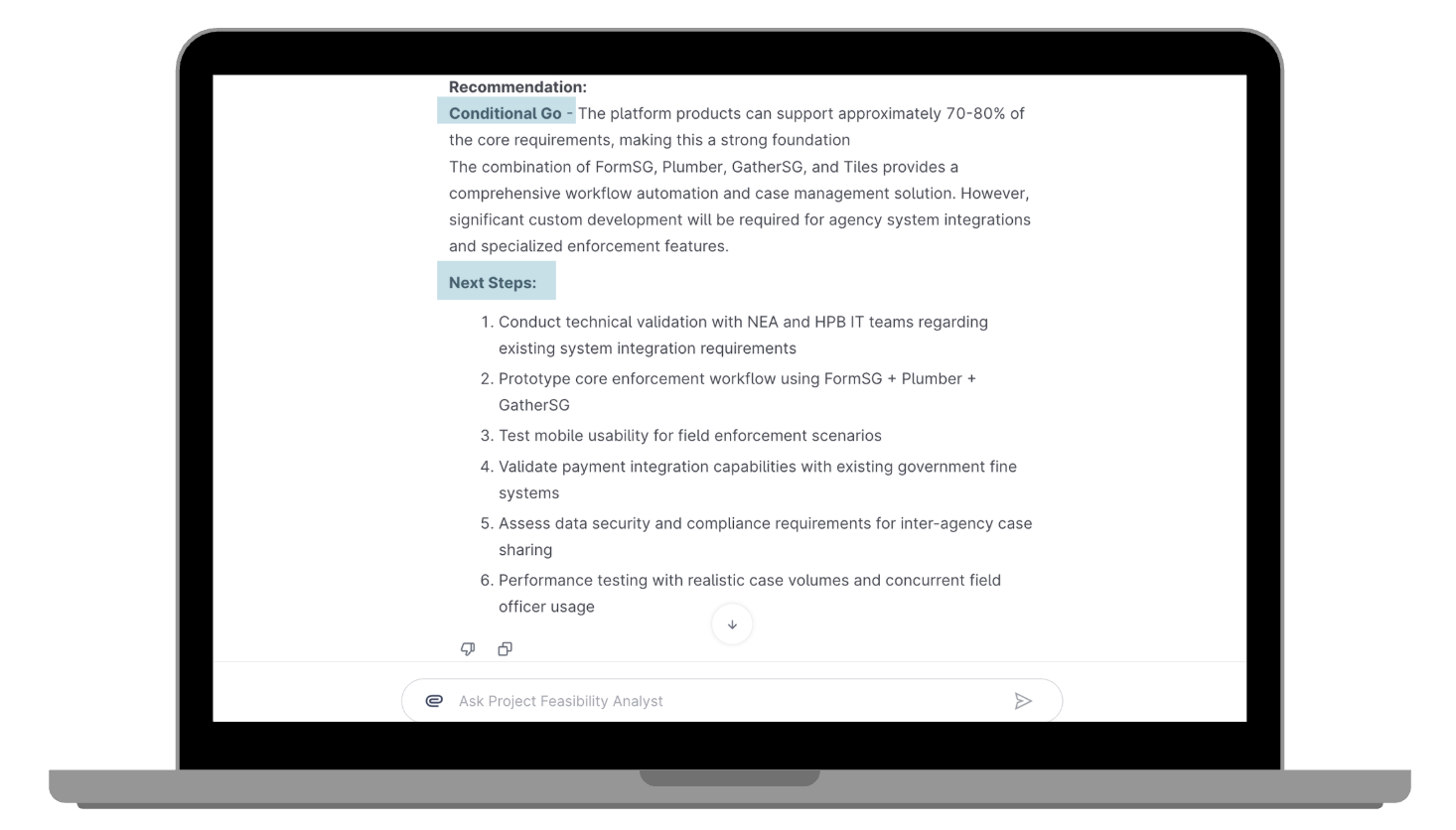
2. Can this problem be solved by existing platform products?
Officers now have immediate access to consolidated information about five government platform options and their capabilities, helping them quickly identify relevant alternatives to evaluate alongside custom solutions. This should eventually reduce the number of costly custom tech builds across government.
What failed and what we learned
One clear learning was that LLMs aren’t all-powerful, especially when it comes to estimating manpower. When tech funding proposals are complex or poorly structured, the model can be led to very different conclusions. In one situation where we tested the Cost Reasonableness Assessment model with a real funding proposal, the assistant recommended 18 MMF (i.e. “headcount”) when the applicant agency only requested 2. This reinforced the need for
Clearer human context and guardrails
Breaking complex evaluations into smaller, sequential steps rather than expecting a single model to reason through everything end-to-end.
Traction — How real people are using it, and what is happening as a result
Given that evaluation cycles could take months, even modest improvements could save significant time across hundreds of million-dollar decisions annually.
We worked closely with key MDDI officers over the past week to understand their workflows and refine the Platform Products Evaluation tool. While these tools haven't been incorporated into live workflows yet, MDDI will pilot both products in upcoming monthly funding reviews (5-6 currently ongoing).
Early feedback suggests the Platform Products Evaluation tool will be particularly helpful in showing where platform products can be combined with custom builds, potentially reducing both assessment time and project costs. Officers will use the outputs during planning sessions to anchor conversations with agencies around implementation choices.
Over time, if proven useful, MDDI intends to make the tool available to applicant agencies, helping them scope projects more thoughtfully and reduce the lengthy back-and-forth during funding reviews.