
Social & Community
✐ᝰ Envelopes
30 January 2026
The cost of not planning is usually paid by someone else.
Envelopes is one half of a twin-solution tackling end-of-life planning for young Singaporeans. You can find out more about the other prototype, Lasting Letters, here.
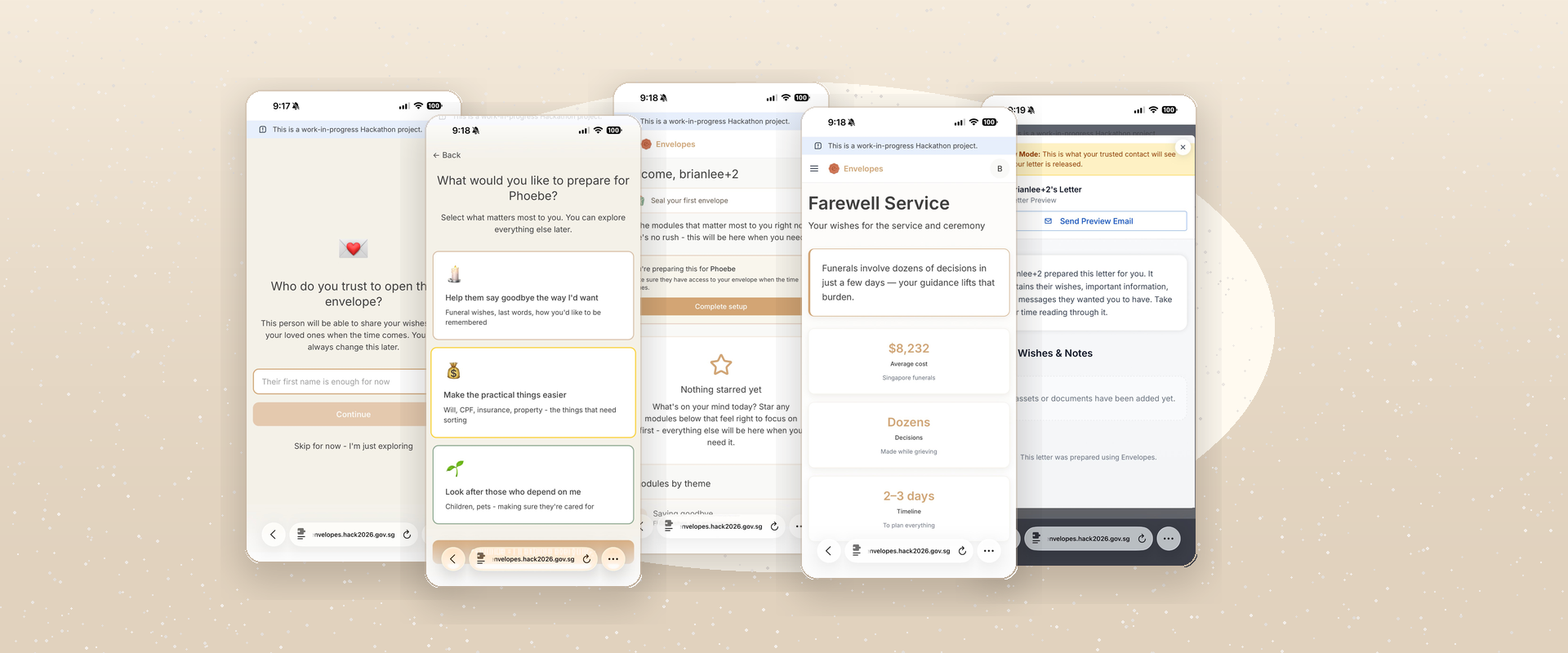
When someone dies without adequate end-of-life planning, their loved ones must navigate grief while figuring out what to do and where to start. Families end up guessing at the person's wishes, dealing with default legal outcomes that may not fit, and facing a slow, costly, court-reliant process.
Despite death being life's only certainty, Singaporeans remain unprepared. Only
Only 13% have both spoken and written down their final wishes, while 53% have done neither (source)
Only 22% have a legally drafted will (source), and less than 3% of Singapore’s population have lodged wills with the Wills Registry (source)
Only 5% have made Lasting Power of Attorneys (source)
This creates real costs for families and government. Cases without wills take 1-3 months longer and cost $500-$1,500 more to resolve (source, source), hitting lower-income families hardest. When people don't nominate CPF beneficiaries, families face delays up to six months while the Insolvency & Public Trustee's Office steps in to distribute funds (source).
This results in real and tangible costs to both citizens as well as government:
Target Audience
Young Singaporeans (25-50) are the least prepared, despite being most open to discussing end-of-life topics. (source; source). There is a gap between what young Singaporeans say they are willing to do, and what they actually do.
While 86% of CPF members aged 65+ have made nominations, only 36% of those aged 16-64 have done so. (source). Just 22% of all wills and 17% of all LPAs belong to people under 50 (source, source).
When we spoke to young Singaporeans, two themes emerged:
Lack of Education = Lack of Urgency: They initially dismissed the topic ("I'm still young", "I don't have many assets") but realized their hesitation came from knowledge gaps and failure to consider consequences.
Overwhelmed with Getting Started: Beyond being emotionally heavy, the tasks were administratively complex, required navigating multiple systems, and confused people unfamiliar with legal processes. It was unclear what they needed to do or where to start.
Envelopes is our attempt at tackling Theme #2. It is a tool that guides young Singaporeans along the process of end-of-life planning, and helps them get started on a will if they need one.
Velocity - what we actually built or changed
Based on user interviews, people with high-intent to start end-of-life planning still struggled to begin because it felt heavy and confusing. Envelopes was designed as a warm, guided space to help them organise at their own pace.
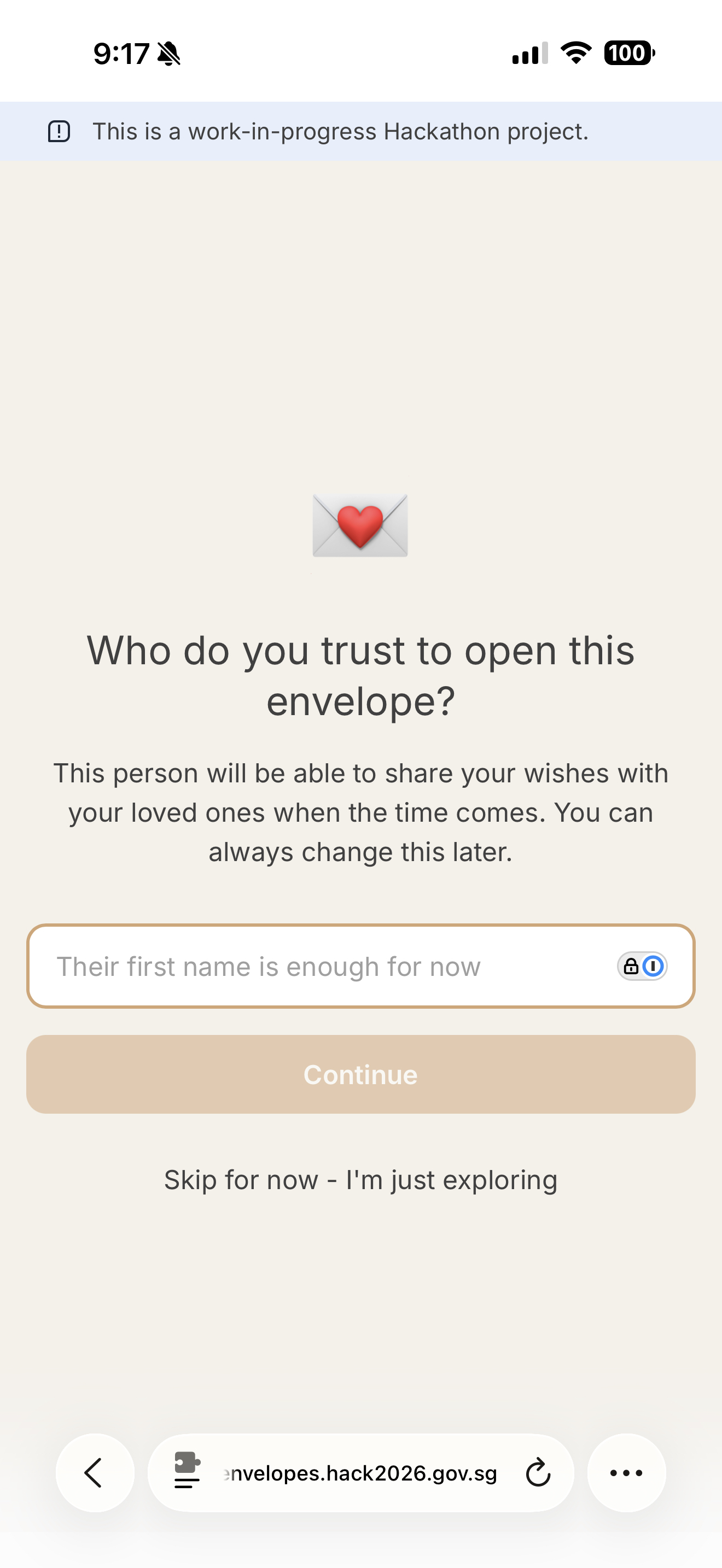
First steps felt intimidating. We made starting tiny and quick, with clear first actions (“less than a minute”, “5 minutes to begin”) and an easy entry point: choose someone you trust.
The topic felt morbid or emotionally loaded. We used gentle, human language and a warm tone to lower the emotional stakes.
People needed scaffolds, but not a rigid checklist. We built guided modules that users can complete non-linearly, starting with what matters, skipping what isn’t, and saving progress to return anytime.
People needed nudging and encouragement to follow through. We made the consequences of non-completion tangible without being fear-based, using plain language, simple proof points, and educational moments to nudge them forward
What we’ve built
Over the past month, we focused on shipping a low-friction, baby-step end-of-life planning flow that helps users start planning without being overwhelmed by emotionally heavy or complex decisions.
What we shipped or meaningfully changed
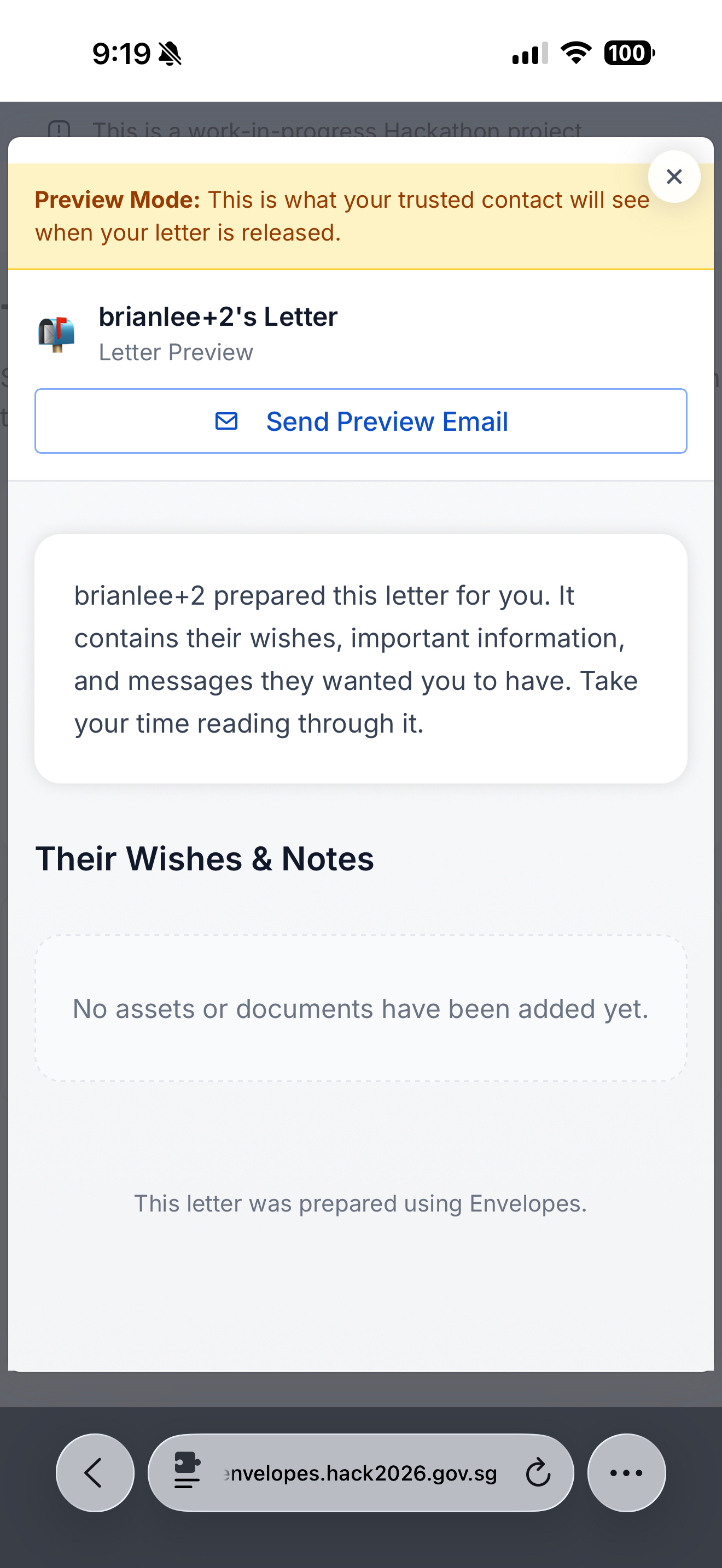
Built an end-to-end guided onboarding flow that starts with a single, low-effort action: choosing a trusted person.
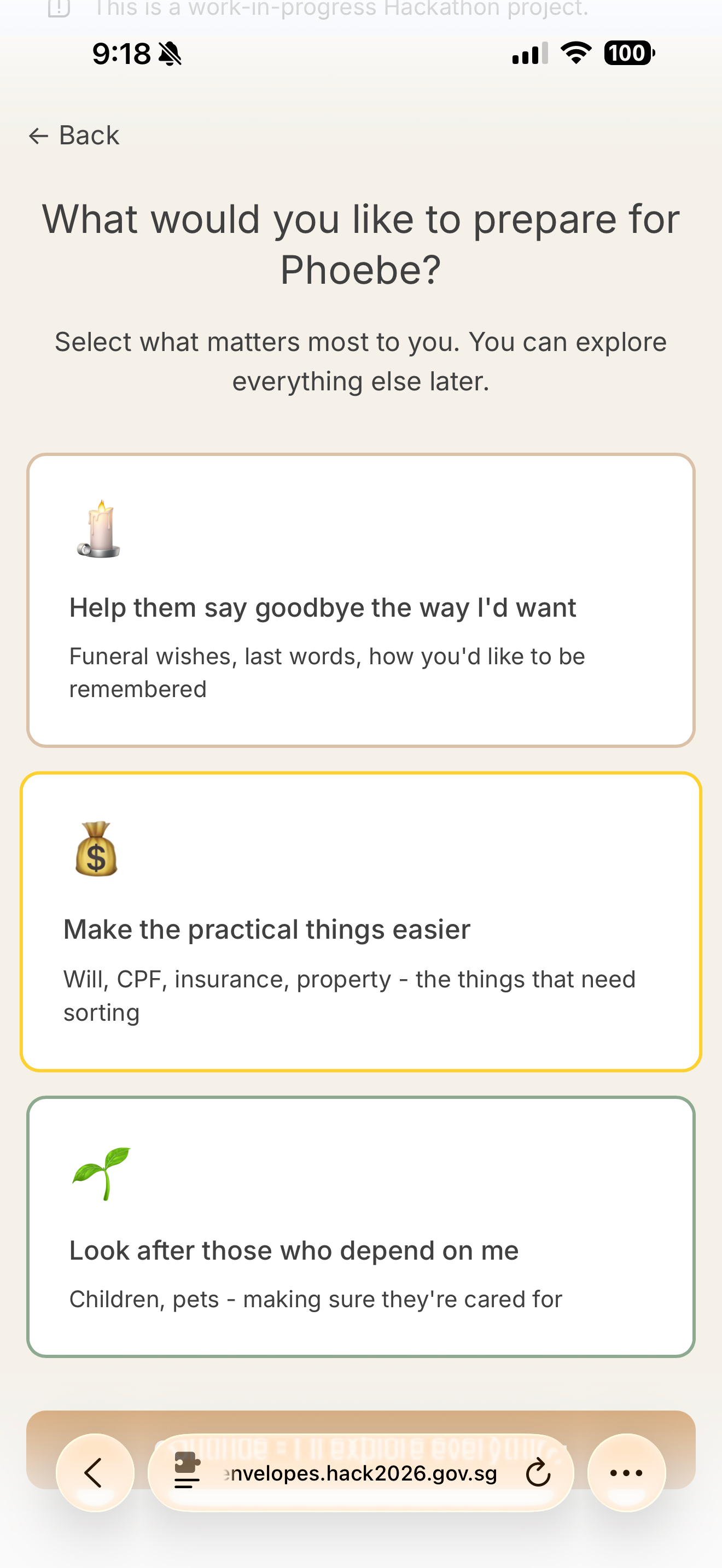
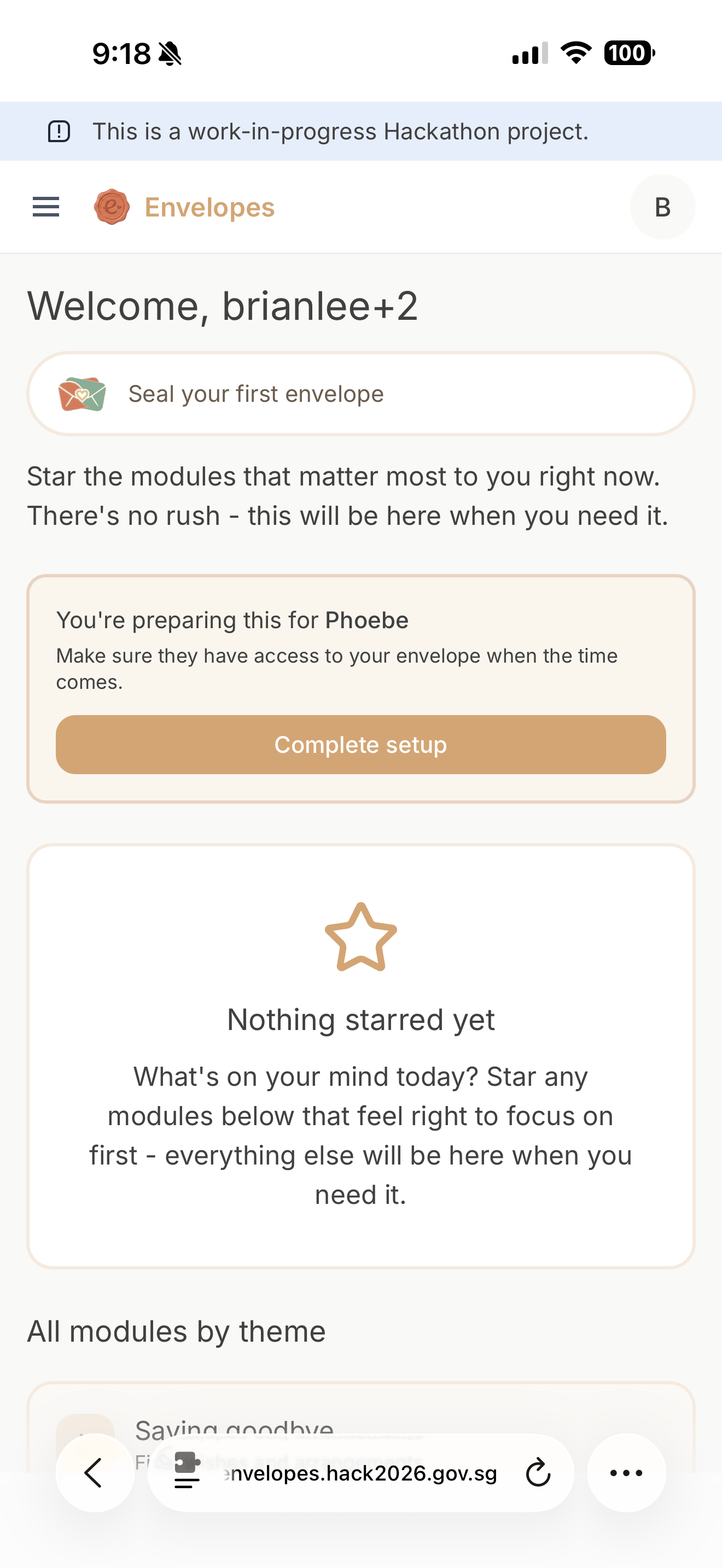
Shipped a modular end-of-life planning structure, covering key areas such as farewell preferences, assets, CPF nominations, insurance, property, children guardianship, and pet care.
Implemented a theme-based reflection step, where users can indicate what they care about most (emotional closure, practical matters, or dependents), with the option to skip any topic.
Added progress saving via “envelopes”, allowing users to complete planning incrementally instead of in one sitting.
Created mini landing pages for each module, explaining why each topic matters and the real-world burden on loved ones if it is left unplanned.
What users can do now that they couldn’t before
Start end-of-life planning without committing to a full will or comprehensive setup.
Capture intentions and preferences in small, discrete modules rather than facing everything at once.
Explicitly designate a trusted person and progressively leave behind structured guidance for them.
Skip topics they are not emotionally ready to handle, without blocking overall progress.
What parts of the product are usable today (even if rough)
Onboarding and trusted-person selection flow
Module selection and navigation
Content capture within multiple planning modules
Saving partial progress into envelopes that persist across sessions
While the experience is still rough, users can already move through the core flow and meaningfully record their intentions.
Important gaps and limitations
The trigger mechanism (e.g. detecting death or incapacity and releasing the envelope) is not built, as it is complex and not practical to demonstrate within a hackathon.
No legal validation or integration with official systems (e.g. CPF, insurance providers) yet.
Content is informative but not yet personalised based on user profile or life stage.
What we tried that didn’t work, and what we learned
We initially explored asking users to complete multiple serious planning topics upfront, but found this created high emotional and cognitive friction.
Based on this, we shifted to a baby-step, opt-in module approach, prioritising psychological safety and momentum over completeness.
We also deprioritised “full coverage” in favour of getting users started, learning that progress beats perfection in this domain.
Traction - how real people are using it, and what is happening as a result
In an internal demo with internal government stakeholders in the end-of-life planning space, our prototype garnered the following traction signals:
Clear user value: Reviewers felt the UI was noticeably approachable and easier to engage with.
Education that drives action: Specific endorsement of the use of simple stats and embedded education moments to help users understand consequences and nudge follow-through.
Validation of problem framing: They affirmed that reducing cognitive load is a core barrier in this space, and that our design direction is tackling a real blocker.
Message resonance: They agreed the strongest motivation is framing planning around protecting loved ones from burdens and uncertainty, consistent with our message testing.
Want to connect?
We believe everyone deserves to leave their wishes clearly expressed and their loved ones prepared.
Have questions or feedback? Reach out at envelopes@hack2026.gov.sg or try it yourself here