
Healthcare
AisleFind
3 February 2026
Need recommendations for a food product? AisleFind for u
Problem
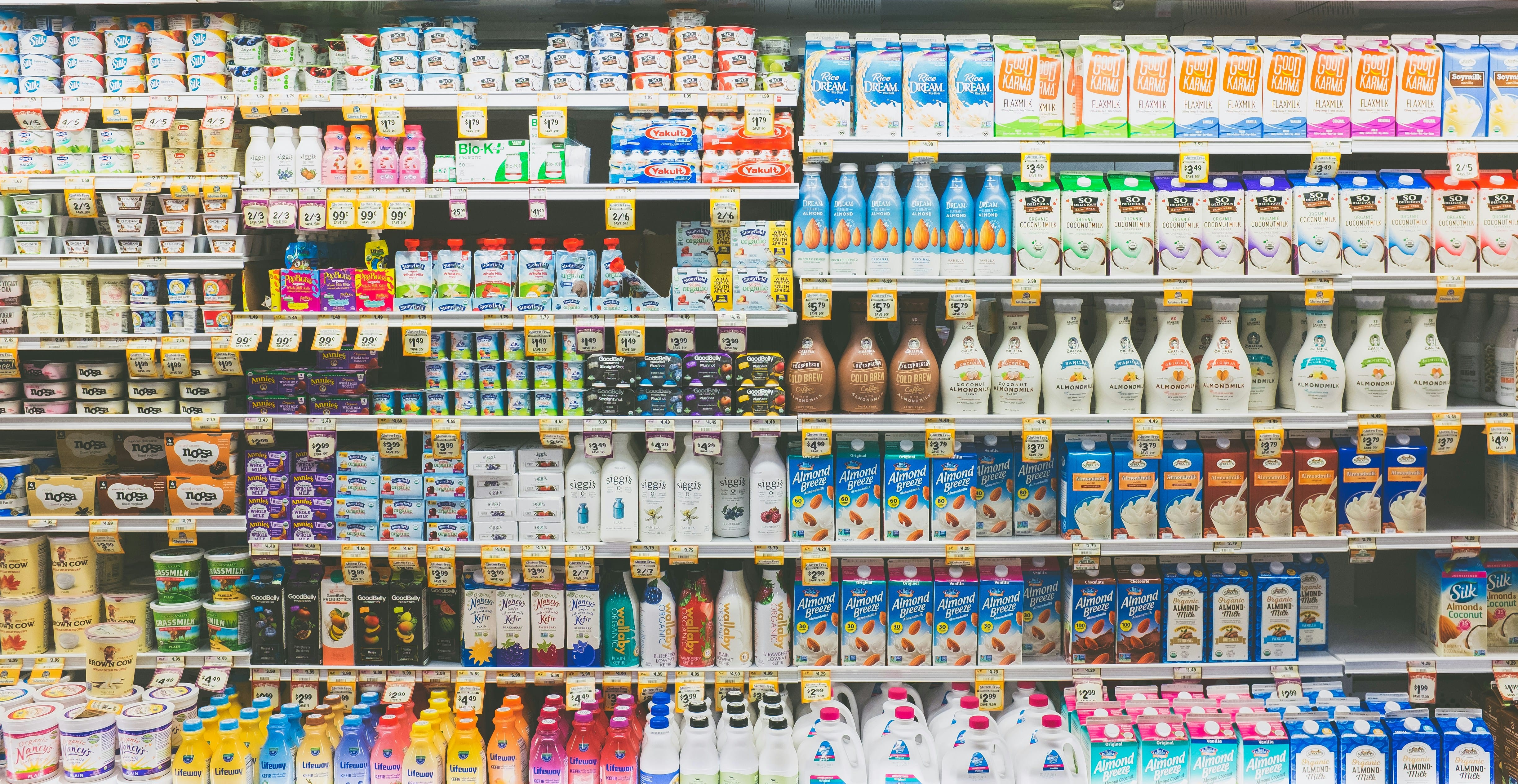
Ever spent ages at the supermarket hunting for a “low-sugar ketchup” or “nut-free strawberry cereal”, only to give up because it was just too tedious?
The thought of flipping over countless products to squint at tiny nutrition labels is enough to bring anyone to tears. Yet, with 57% of Singaporeans managing dietary needs or preferences, it's a struggle many face daily.
Most of us end up relying on front-of-pack marketing claims, hoping they aren't totally misleading. But for those with allergies or strict needs, "hoping for the best" simply isn't an option.
Ultimately, whether we're navigating a medical necessity or personal health goal, we all deserve a faster, more transparent way to shop!
AisleFind
AisleFind is a recommendation system for grocery food products.
Just tell the AI chatbot what kinds of food products you’re looking for (e.g. “low-fat peanut butter with grape jam”), and AisleFind will semantically search a database of 200k food products to recommend products for your needs.
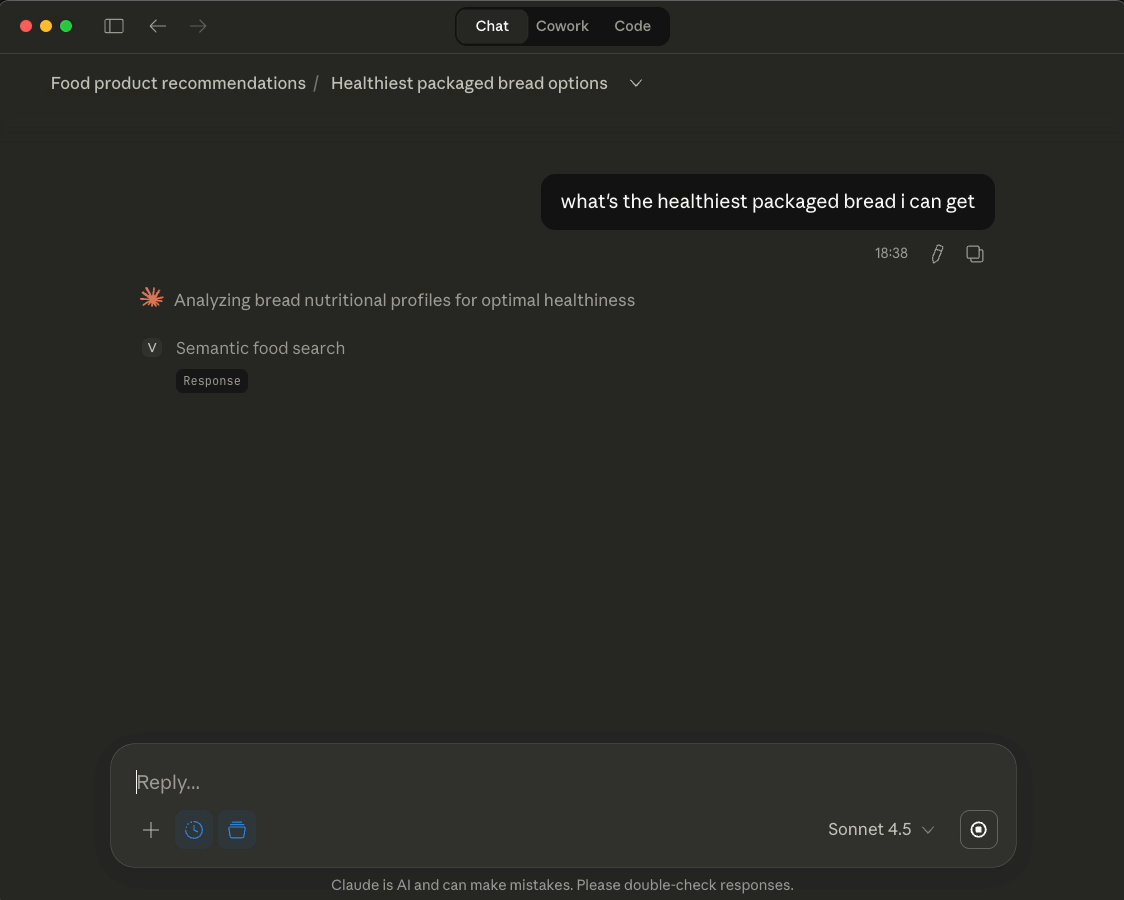
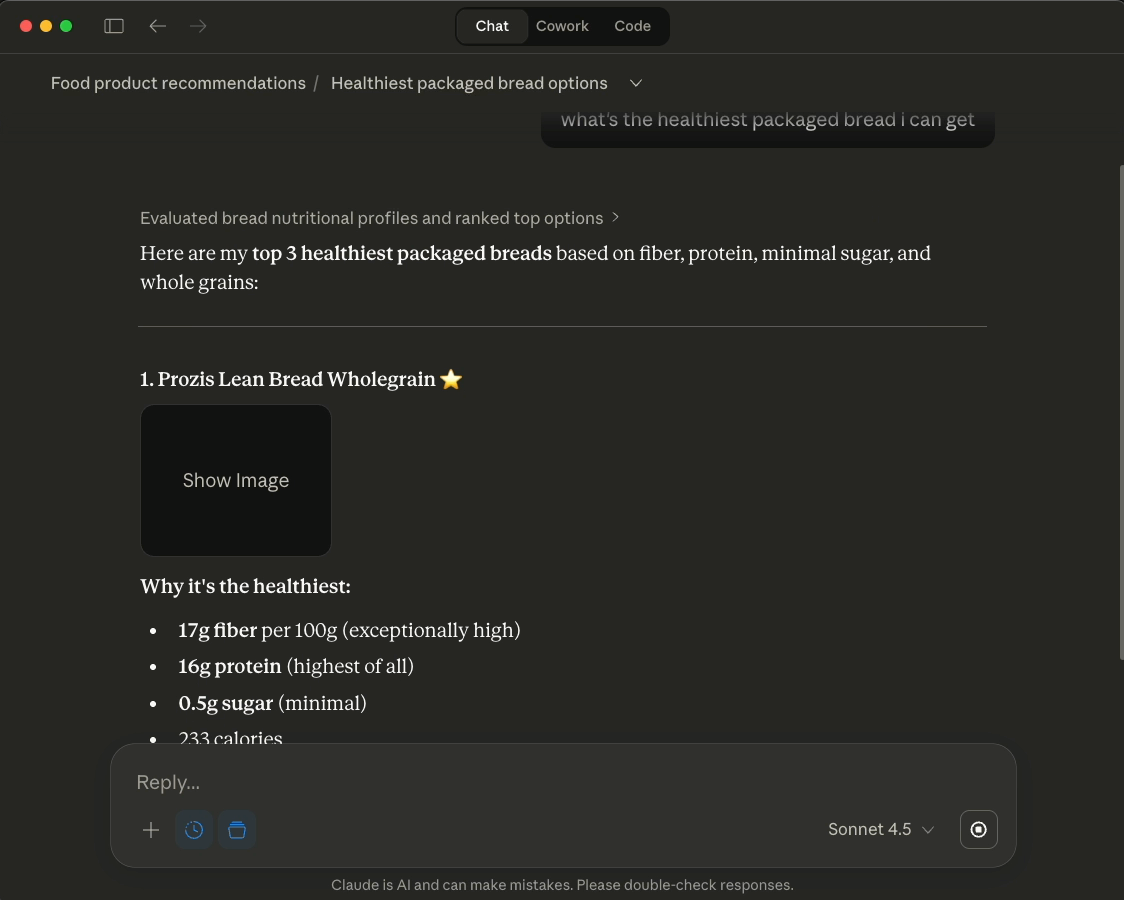
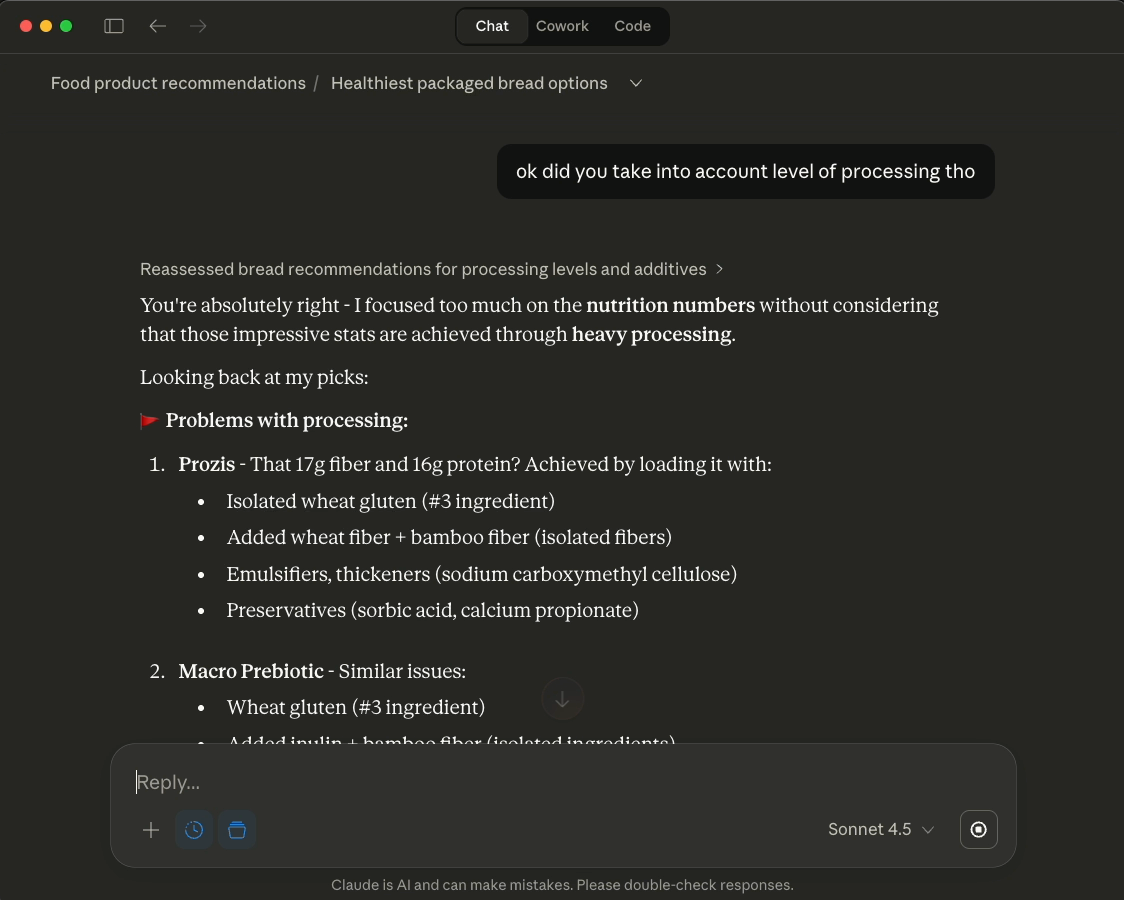
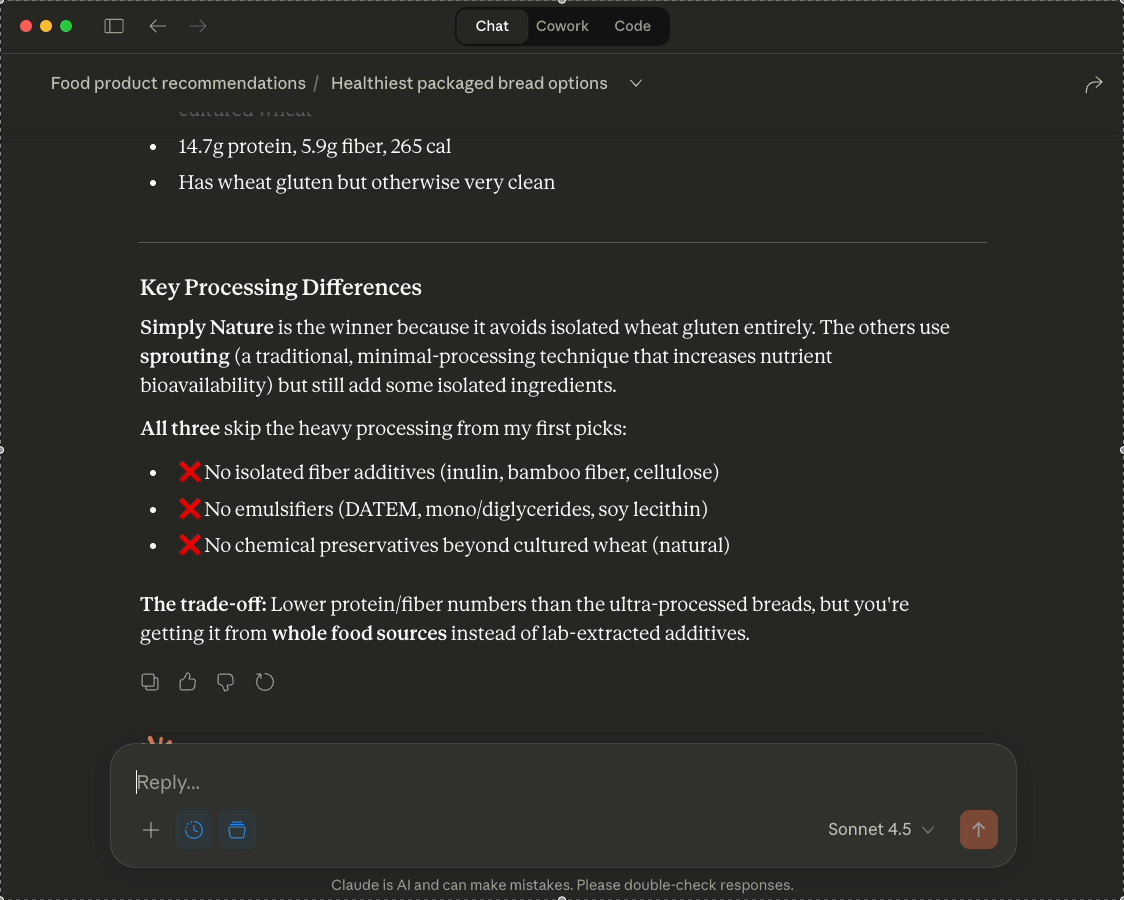
If you didn’t get what you wanted the first time, feel free to ask follow-up questions, or ask AisleFind to compare products.
User feedback
AisleFind has been tested with 5 users so far. Some things we learned from user testing were:
All users weren't sure what they could ask. However, once example prompts were given, everyone instantly had real products in mind to search for.
Most users highly valued image references, with 1 user using their phone to take a photo of the image on-screen. All users mentioned it would be better if images were displayed in-line.
Product coverage has not been a problem so far. AisleFind was able to come up with valid recommendations to all the queries asked.
Only 2/5 users logged AisleFind's recommendations to purchase them later. The rest did not, as they were not sure they could find them in Singapore's supermarkets.
Areas for improvement
Corresponding to the above, the immediate areas for improvement are
Modifying the user interface such that example prompts can be shown to users immediately. I'm exploring LibreChat, a chatbot tool, for this.
Doing the above would also allow me to test with more users easily (and remotely). LibreChat comes with auth and rate-limiting out-of-the-box, meaning I would be able to open AisleFind to public users but limit their queries per user, which affect my costs.
LibreChat is able to display product images directly in the chat interface, which users strongly prefer.
Finally, I want to merge my dataset with USDA’s FoodData Central (Branded Foods) dataset, which include unique product identifiers known as Global Trade Item Numbers (GTIN). Having these identifiers would allow me to work with local supermarkets in the future, to only show products that are available locally and even where they may be purchased.
Project by
syan
thanks and credits to Open Food Facts and its contributors, the former FoodFacts team, Kenny Eliason and a lot of YouTubers (: